
Semax
Overview
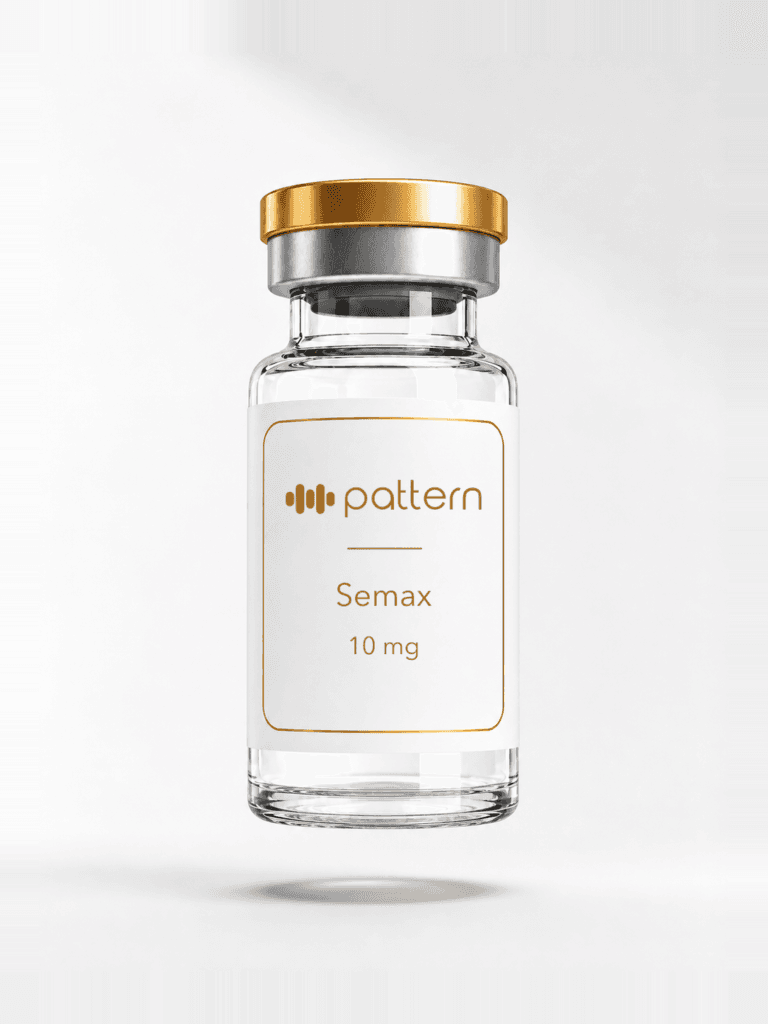
Research-use ACTH(4-10) analogue supplied for studies of neurotrophic signaling, neuronal plasticity, and CNS stress-response models.
- Concentration
- 10 mg
- Stock
- In stock
Product details
Semax is a synthetic heptapeptide analogue of the ACTH(4-10) fragment used in neurotrophic-signaling research models. Pattern lists this material for controlled laboratory research.
Research Targets: BDNF-associated pathways, TrkB signaling models, neuronal plasticity networks, CNS oxidative-stress response.
Key Feature: ACTH(4-10)-derived heptapeptide format for neural pathway research.
Research Focus Areas: Neurotrophic signaling, learning and memory pathway models, CNS injury model signaling, redox-response research.
Common Models: Rodent CNS models, neuronal culture assays, behavioral learning paradigms.
Mechanistic Interests: BDNF expression markers, TrkB pathway signaling, antioxidant response markers, neuronal plasticity mechanisms.
Use Boundary: Research use only; not for human or veterinary use; no diagnostic, therapeutic, or consumption use is implied.
Research context
Peptide guide
Open full guide- Guide profile
- Synthetic ACTH Analog
- Composition
- Synthetic heptapeptide (Met-Glu-His-Phe-Pro-Gly-Pro) analog of the adrenocorticotropic hormone (ACTH) fragment ACTH(4-10), with an added C-terminal Pro-Gly-Pro sequence for enhanced stability and duration of action
- Discovery
- Developed in the 1980s–1990s by researchers at the Institute of Molecular Genetics of the Russian Academy of Sciences, building on studies of ACTH fragments for neurotrophic effects without endocrine activity
- Research scope
- Preclinical studies (rodent models of ischemia, hypoxia, Alzheimer's-like pathology, Parkinson's models) show Semax reduces infarct size, promotes neuronal survival, upregulates BDNF/TrkB expression, modulates gene expression related to immune/vascular systems, and improves cognitive performance
- Regulatory status
- Not approved for broad therapeutic use outside Russia
Safety context
- Limited data; caution in neurological conditions without oversight
- Not approved for therapeutic use outside Russia
- Evidence outside Russia is limited to small studies and preclinical models
Research-use notice: Semax has preclinical and Russian clinical literature for neuroprotection and cognition-related endpoints, but evidence outside Russia is limited and it lacks FDA or EMA approval. The strongest teaching frame is regional clinical history plus mechanism, not broad nootropic claims. Clinical decisions require qualified medical oversight.
Full guide includes 10 reference entries.
This product does not have enough stock for a 10-vial kit.