
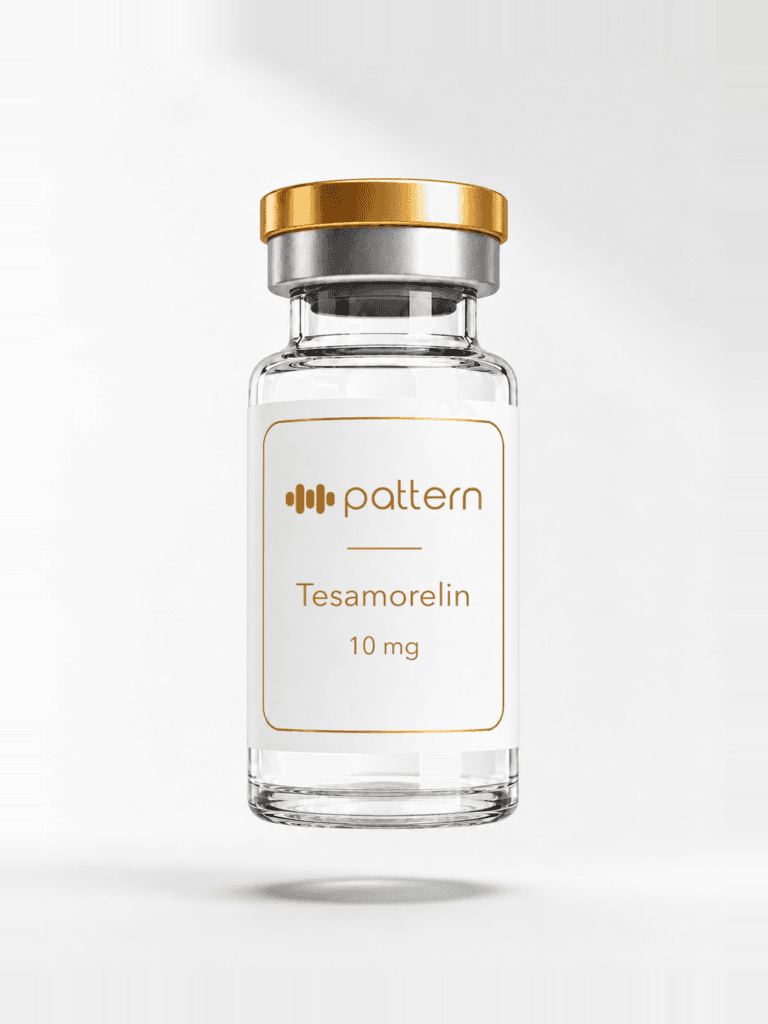
Tesamorelin

Overview

Research-use GHRH analogue supplied for studies of pituitary GH-release signaling and endocrine pathway models.

Concentration
10 mg / 20 mg
Stock
In stock

Product details

Tesamorelin is a synthetic GHRH analogue used in research models of pituitary GH-release signaling and endocrine pathway biology. Pattern lists this material for controlled laboratory research.

Research Targets: GHRH receptor signaling, pituitary somatotroph pathways, GH/IGF-1 axis models.

Key Feature: Stabilized GHRH analogue format for endocrine signaling research.

Research Focus Areas: Pituitary signaling, GH-release pathway studies, metabolic pathway models, endocrine feedback research.

Common Models: Pituitary cell cultures, rodent metabolic studies, receptor-signaling systems.

Mechanistic Interests: GHRH receptor binding, cAMP/PKA signaling, IGF-1 pathway markers, somatotropic-axis feedback dynamics.

Use Boundary: Research use only; not for human or veterinary use; no diagnostic, therapeutic, or consumption use is implied.
Research context

Peptide guide

Open full guide
Guide profile
GHRH Analog for Visceral Fat Reduction
Composition
Synthetic analog of human growth hormone-releasing hormone (GHRH), comprising 44 amino acids with modifications to enhance stability and half-life
Discovery
Developed by Theratechnologies in the early 2000s specifically to address lipodystrophy and excess visceral fat in HIV-infected patients on antiretroviral therapy (ART)
Research scope
Pivotal Phase 3 trials in HIV lipodystrophy demonstrated visceral fat reductions, while metabolic effects vary by endpoint
Regulatory status
FDA-approved for HIV-associated lipodystrophy; other indications (general visceral obesity, NAFLD) remain off-label or investigational

Safety context

  • Active malignancy or history of cancer (especially pituitary tumors)
  • Diabetic retinopathy or proliferative conditions
  • Critical illness (acute catabolic states)

Research-use notice: Tesamorelin (Egrifta®) is FDA-approved specifically for reduction of excess abdominal visceral fat in HIV-associated lipodystrophy, supported by pivotal Phase 3 trials. Use for general visceral obesity, metabolic syndrome, NAFLD, or aging-related body-composition claims is not FDA-approved and lacks the same level of clinical validation. Benefits are sustained only with continued use and reverse upon discontinuation. Compounded formulations may vary in quality, and clinical decisions require qualified medical oversight.

Full guide includes 10 reference entries.

Tesamorelin 10 mg
Concentration
ConcentrationSelect concentration