
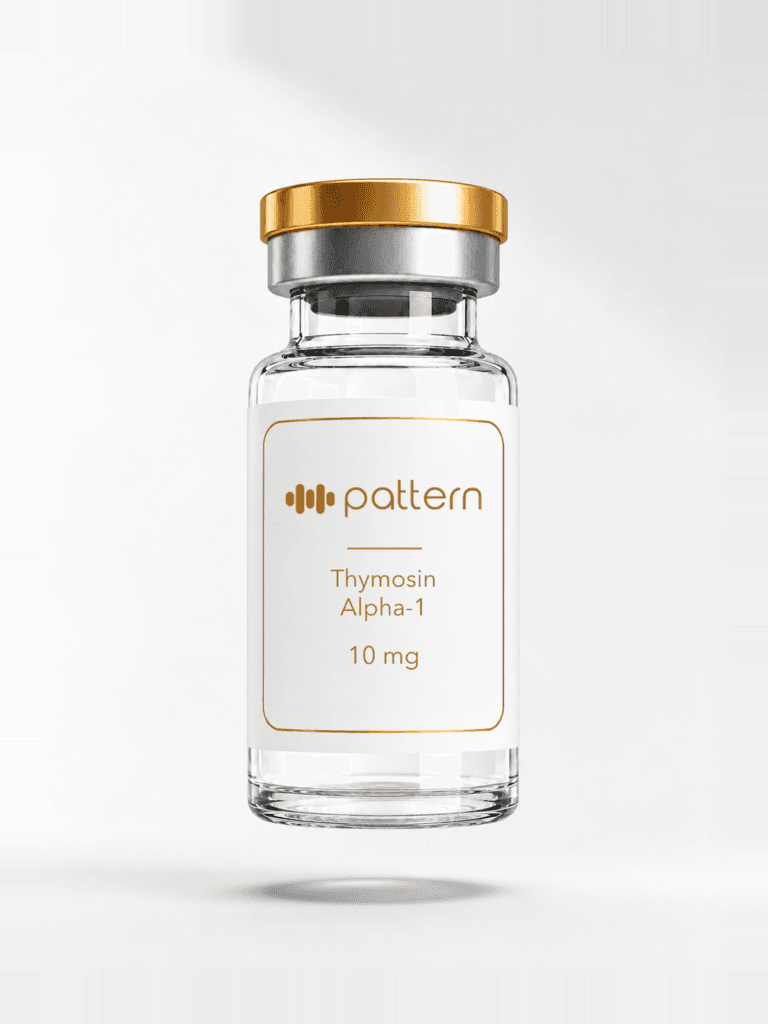
Thymosin Alpha-1
Overview
Research-use thymic polypeptide supplied for studies of immune signaling, T-cell pathways, and cytokine regulation models.
- Concentration
- 10 mg
- Stock
- In stock
Product details
Thymosin Alpha-1 is a synthetic thymic polypeptide used in research models of immune signaling and T-cell pathway biology. Pattern lists this material for controlled laboratory research.
Research Targets: T-cell pathway models, toll-like receptor signaling, cytokine networks, innate and adaptive immune signaling systems.
Key Feature: 28-amino-acid thymic peptide format for immunology research.
Research Focus Areas: Immune modulation models, T-cell maturation, cytokine regulation, host-response pathway studies.
Common Models: Lymphocyte cultures, infection and immunity paradigms, cytokine response assays.
Mechanistic Interests: TLR pathway activation markers, T-cell differentiation, cytokine balance, antigen-presentation pathway signaling.
Use Boundary: Research use only; not for human or veterinary use; no diagnostic, therapeutic, or consumption use is implied.
Product documentation
Certificate of Analysis
Thymosin Alpha-1
Review the public certificate available for this product before creating an account or checking out.
Research context
Peptide guide
Open full guide- Guide profile
- TA-1 / Thymalfasin
- Composition
- Synthetic 28-amino-acid peptide identical to the naturally occurring thymosin alpha-1 produced by the thymus gland
- Discovery
- First isolated in the early 1970s by Dr. Allan Goldstein from calf thymus extracts during research into thymic hormones and their role in T-cell development
- Research scope
- One of the more clinically studied peptides, with decades of human trial data in selected regional indications
- Regulatory status
- Approved in select regions for hepatitis and certain cancers; investigational or off-label in the US where it is not FDA-approved for any indication
Safety context
- Limited contraindications based on extensive clinical data
- Not FDA-approved in the US; remains investigational or off-label in many contexts
- Long-term use should involve medical supervision with appropriate monitoring
Research-use notice: TA-1 has human clinical literature in selected approved indications outside the United States and is generally well-tolerated in those contexts, but it is not FDA-approved for use in the United States. It remains investigational or off-label in many settings, and long-term use should involve qualified medical supervision with appropriate monitoring.
Full guide includes 10 reference entries.
This product does not have enough stock for a 10-vial kit.